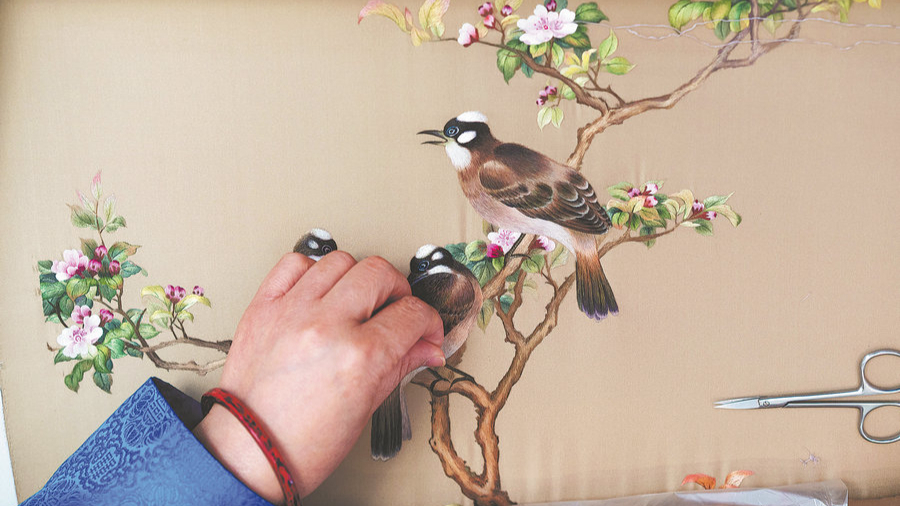
Su Embroidery
Introduction
Su Embroidery, a renowned traditional Chinese embroidery style, hails from Suzhou in the prosperous Jiangsu province. It is recognized as one of the Four Famous Embroideries of China, which also includes Xiang, Shu, and Yue embroidery. Su Embroidery is celebrated for its exquisite needlework, vibrant colors, and the variety of stitches that offer a vivid presentation. The craft involves a meticulous process, from fabric selection and design sketching to the final embroidery work. Su Embroidery typically depicts elements of nature, such as flowers, birds, and elegant landscapes. Known for its smoothness and delicateness, this craft has been a vital cultural heritage for more than 2,500 years and was designated a state-level intangible cultural heritage in China in 2006.
History
The history of Su Embroidery spans over 2,500 years, tracing back to the Spring and Autumn Period (770-476 BC) when embroidered silk fabrics were unearthed from ancient tombs. Suzhou's rich cultural and artistic environment, with its long history of silk production and textile craftsmanship, provided a fertile ground for the development of intricate embroidery techniques. During the Song Dynasty (960-1279), Su Embroidery reached its golden age, incorporating elements of literati paintings popular at the time. By the Qing Dynasty (1644-1911), it had become a favorite in the royal court, renowned for its intricate designs and elegant style. The craft was further developed in the mid and late Qing periods with innovations such as double-sided embroidery.
Techniques
Su Embroidery is distinguished by its intricate techniques, harmonious color schemes, and variety of stitches. It boasts over 50 different stitching methods today, allowing artisans to create detailed and vivid depictions of their subjects.
Stitching Methods
Among the many stitching methods, the dazi or "making seeds" technique is particularly notable. It creates small, even-raised knot patterns that add texture and depth to the embroidery. Other techniques vary depending on the subject matter, such as different stitches for a cat's eyes, fur, and tail to achieve a lifelike effect. These flexible stitching techniques are critical to the craft and are adapted to suit the specific requirements of each artwork.
Materials Used
The primary materials used in Su Embroidery are high-quality silk threads and fabric, reflecting Suzhou's rich history of silk production. These silk threads can be dyed in various shades and split into extremely fine strands, often too thin to be seen with the naked eye. This allows embroiderers to achieve a high level of detail and color gradient in their works.
Cultural Significance
Su Embroidery holds a significant place in Chinese cultural heritage as a symbol of elegance and artistry. Its development is closely linked with the social and cultural milieu of Suzhou, a city renowned for its artistic lifestyle and rich history. The craft reflects the aesthetic tastes of the city's nobility, who were instrumental in its evolution. Su Embroidery has been likened to painting, with many artists offering their works as templates for embroiderers to recreate. This artistic connection elevates the craft beyond mere needlework to a form of visual expression akin to fine art.
Preservation and Promotion
Efforts to preserve and promote Su Embroidery are ongoing, with institutions like the Suzhou Silk Embroidery Research Institute playing a pivotal role in training new generations of embroiderers and developing innovative techniques. Artisans are also promoting the craft through exhibitions, workshops, and collaborations with other art forms. By engaging with both traditional and modern avenues, these efforts aim to ensure that Su Embroidery continues to thrive and be appreciated as a vital part of China's cultural heritage.








